
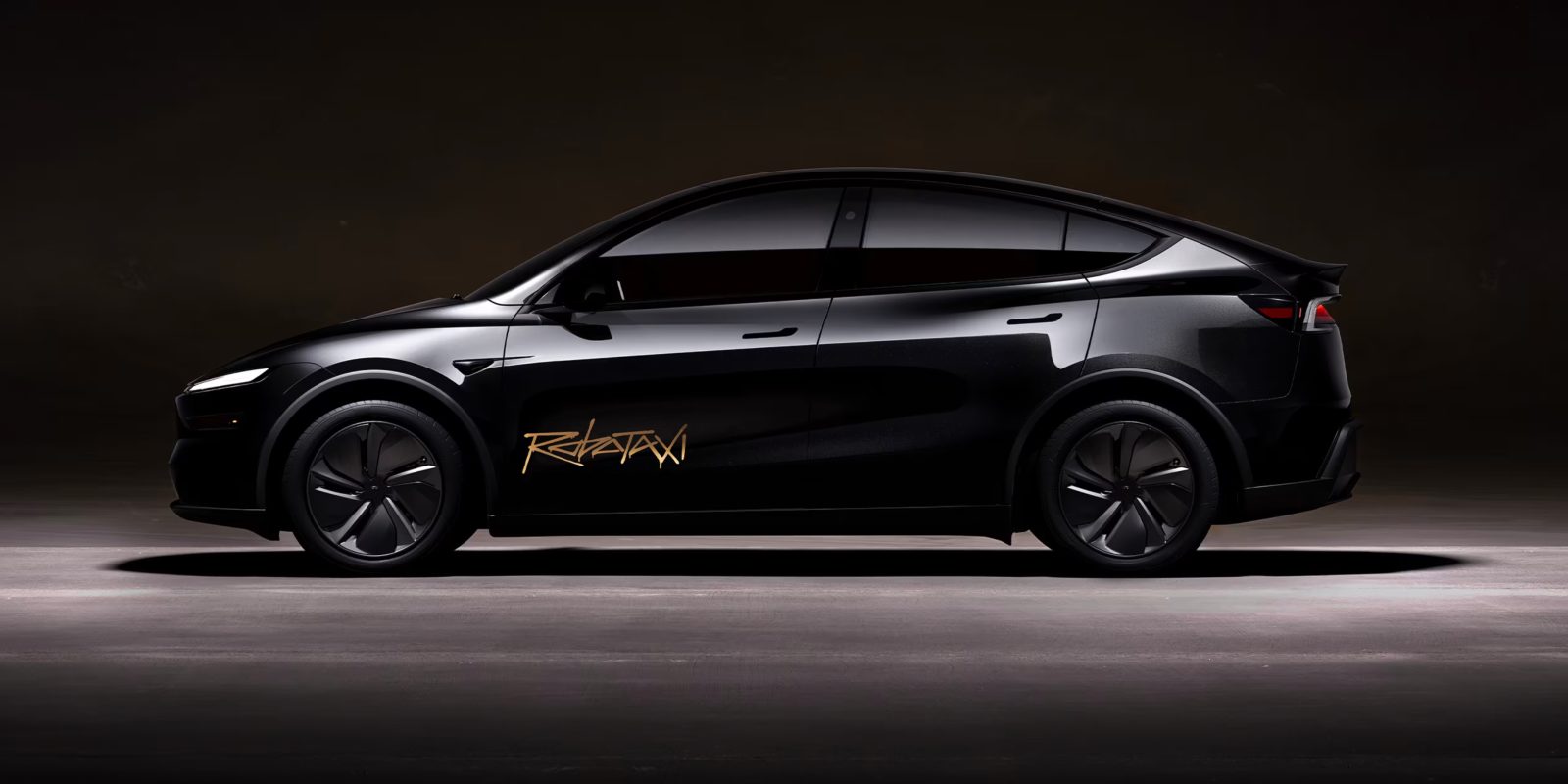
An engineering student managed to reverse-engineer Tesla’s Robotaxi app and collect data that shows the autonomous but supervised ride-hailing system in Austin consists of no more than a few vehicles (~5) operating at the same time.
In our report, ‘Tesla Robotaxi launch is a dangerous game of smoke and mirrors‘, from earlier this year, we reported that we expected Tesla to rush a “Robotaxi” service in Austin to give Elon Musk a win after years of missed deadlines and promises regarding autonomous driving.
Competitors, such as Waymo, are rapidly expanding their own robotaxi networks, making it harder for Tesla to maintain the impression Musk crafted that it is the leader in autonomous driving.
We suspected that the Robotaxi program in Austin, located in Texas, a state with some of the most lax regulations regarding autonomous driving, would be more about optics than the actual launch of Tesla’s long-promised autonomous ride-hailing service.
The service “launched” as a pilot in June, Tesla claims to launched the Robotazi app “for all” in September, CEO Elon Musk claimed to have since “doubled the size of the fleet” in November, and Tesla expanded the service area several times:
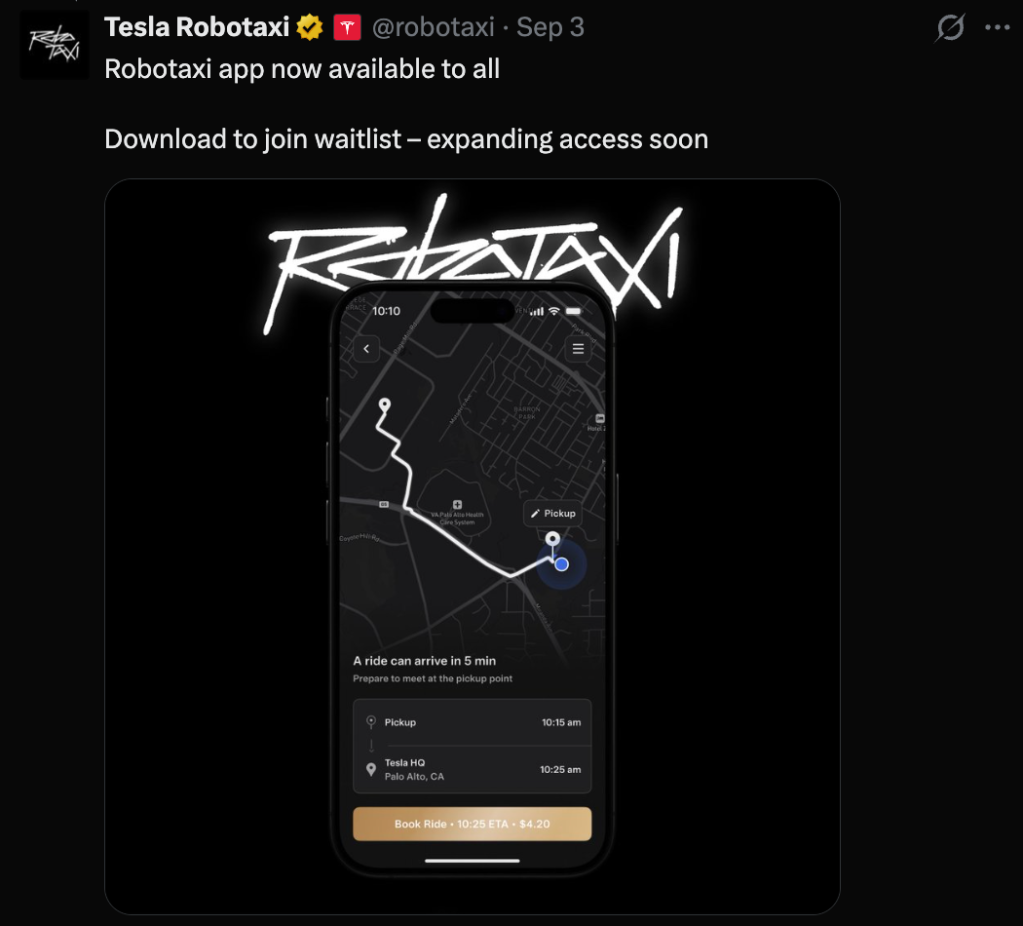
During those 6 months, Musk also made several wild predictions, including claims that the Robotaxi fleet in Austin would reach “500 vehicles” by the end of the year and that the Robotaxi would “cover half the US population” by the end of the year.
The CEO also said that Tesla would remove the safety drivers inside the vehicles in Austin by the end of the year.
If you are only following Tesla’s official channels, you would think that everything is going as planned: Tesla launched Robotaxi as a pilot with safety drivers in June, opened the service to “all” in September, and doubled the fleet in November. Now, Tesla accumulated enough safety data to remove the safety drivers and rapidly expand.
However, the reality is that Tesla is barely operating its Robotaxi in Austin.
This morning, Electrek spoke with Ethan McKanna, a 19-year-old engineering student at Texas A&M, who reverse-engineered Tesla’s Robotaxi app to track the availability of the network.
He made it available in an online tracker.
McKanna’s tracker has found 32 different Tesla Model Ys used in the Robotaxi network in Austin. It’s far from 500, but it is in line with the previous claim of “doubling” the fleet.
But what the tracker exposes is that while Tesla is “adding” vehicles to the Robotaxi fleet, it doesn’t mean that they are all or even the majority of them are in operation most of the time.
In fact, McKanna’s data points to Tesla using fewer than 10 Robotaxis at the same time, and that’s if they are using any at all:
This is speculative on my part, but it’s my best guess based on the little data we have and can collect. One person I talked to who scoped out the depot and recorded videos told me he believes there are 1-5 out at a time. The highly sporadic wait time shifts and my experience of consistently getting the same vehicle multiple times when I use the service in the data all corroborate that.
For example, over the last week, McKanna’s tracker showed that Tesla’s Robotaxi service in Austin was unavailable about 60% of the time:
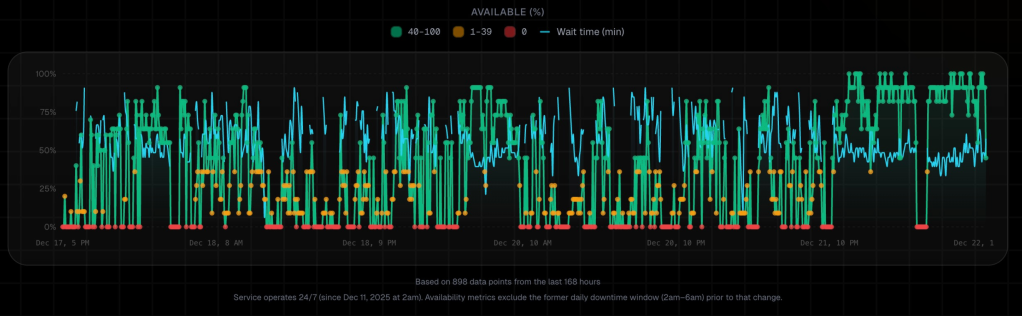
The young engineer explained how he obtained this data:
I found the robotaxi app APIs to be able to fetch prebook eta estimates from Tesla. I have a server where every 5 minutes I ping Tesla at ~10 points in both service areas, pull the wait time, and store it. If a wait time is offered, I count it as available, if “high service demand” or any other type of error is shown, it is marked as unavailable.
Anyone using Tesla’s Robotaxi app in Austin would often get a notification that the service is unavailable due to “high service demand”, but this is not precisely the case.
McKanna’s tracker can ping 11 different locations within the service area in Austin, and as the chart above shows, it is often shown to be unavailable everywhere, even within the official working hours.
Here are the current wait times at the time of publishing this article (~1 PM Austin time):
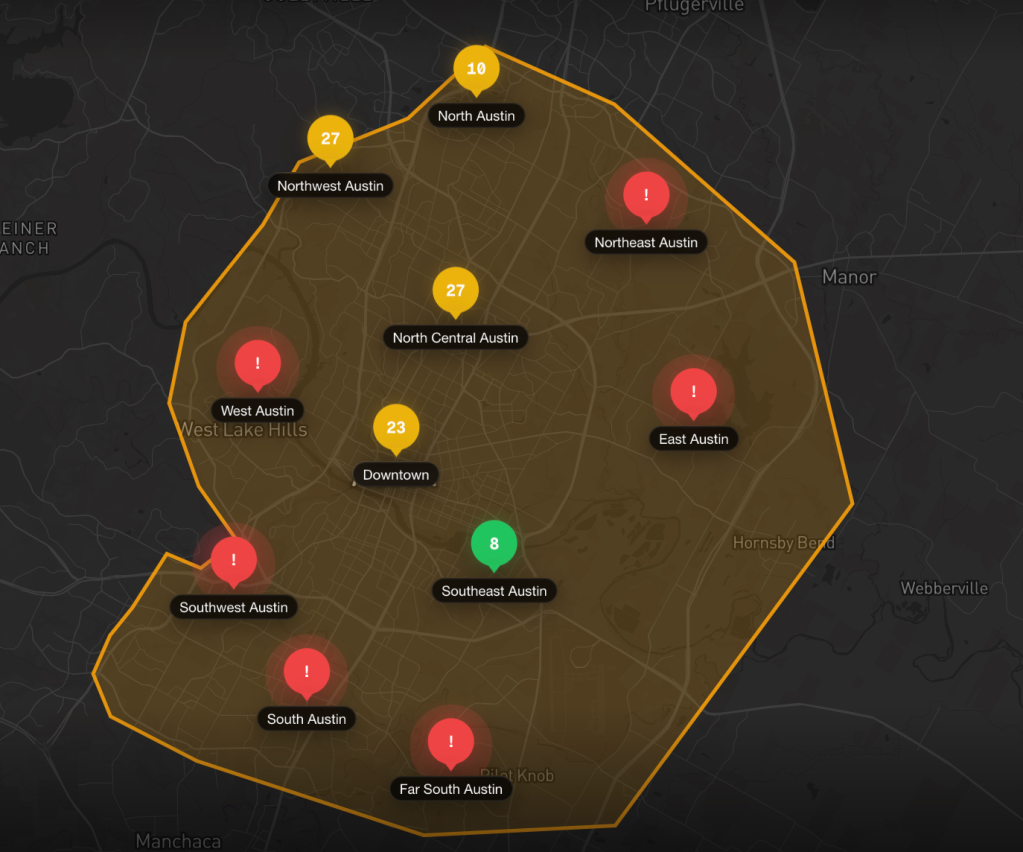
This suggests that either no vehicles are in operation or only a handful are concentrated in a specific area of the service map, and they are all pre-booked in advance, which is unlikely considering ride-hailing services are about quickly matching demand with supply.
Rather than being a “high service demand” situation, it is more about being a low or no supply situation.
Electrek’s Take
Based on Tesla’s official channels and paid influencers/investors, the Robotaxi service appears on the surface to be progressing as planned:
- Tesla launched as a pilot in June with a handful of cars available to a handful of influencers/investors
- Tesla expands the fleet and service area in August
- Tesla opens the Robotaxi app “to all” in September
- Tesla doubles the fleet in November
- Now, Tesla is about to remove the safety monitors and expand rapidly
The reality is that while Tesla is doing the “easy things” for optics, such as adding more vehicles to the fleet and expanding the service area, the actual service barely exists.
What is the point of having a fleet of 30 vehicles if you are only operating 3-6 at a time?
Top comment by taverngeek
I think the two most important numbers are how many vehicles is Tesla testing in California without a safety driver and how many miles they go between a safety disengagement. And the answer is still 0 vehicles because Tesla still has yet to receive the California DMV permit to begin testing autonomous vehicles without a safety driver. And presumably, Tesla doesn't want to pull that permit because they'd be forced to publicly reveal how many miles between a safety related disengagement.
What is the point of “opening the service to all” if you are only able to offer a few rides per hour?
What is the point of removing the safety monitor if you already have a crash rate higher than human drivers, with the safety monitor presumably preventing further crashes?
The point is optics. Elon Musk is trying to maintain the illusion that Tesla is leading in autonomy and giving himself a win on some predictions after a full decade of missed deadlines.
The concerning part is that it poses a safety risk to all road users.


FTC: We use income earning auto affiliate links. More.


Comments